
When it comes to protecting finished floors, not all paper products are created equal. Builder’s paper has been around forever. Ram Board showed up to fix what builder’s paper never could.
Yes. Both are made from paper.
No. That doesn’t mean they perform the same.
Let’s break it down.
Ram Board vs. Builder’s Paper: Feature Differences
At first glance, Ram Board and builder’s paper might look similar. They’re both paper‑based. They’re both breathable. They both roll out fast and are used to protect floors during construction.
That’s where the similarities end.
The real difference is thickness. And thickness changes everything. Ram Board is significantly thicker than traditional builder’s paper– and that added thickness is what allows it to:
- Withstand heavy foot traffic
- Hold up under ladders, carts, and equipment
- Protect finished surfaces from spills, splashes, and jobsite mess
Builder’s paper? It’s thin by design. It’s meant for light-duty coverage. Think dust control, paint prep, short-term jobs. Once moisture, boots, or equipment enter the picture, traditional builder’s paper breaks down fast.
Thickness is the difference between protection and a problem– and more thickness means more durability.
 Is Ram Board Worth the Cost vs. Builder’s Paper?
Short answer: it depends on the job.
If you need basic, short-term surface coverage, with minimal foot traffic and little risk of spills, builder’s paper can be a practical, budget-friendly option.
But if the job involves heavy traffic, tools, moisture, or any real risk of damage, Ram Board is built for that level of protection. While it comes with a higher upfront cost, it’s far less expensive than repairing floors that were never adequately protected. If we’re being honest- we’re biased. But in our experience, builder’s paper simply isn’t “good enough” when you need reliable, long-lasting surface protection.
Will Ram Board or Builder’s Paper Damage Floors?
Here’s the truth: floors usually get damaged when they’re not protected at all. When used correctly, Ram Board is designed to protect (not harm) finished surfaces. But installation matters.
When installing Ram Board:
- Use seam tape only on seams
- Use edge tape only on edges
- Never tape directly to the floor surface beyond those areas
Ram Board offers 14 day and 90 day edge tape options, both engineered to remove cleanly with no damage and no residue when used as directed.
Need a Better In-Between? Try Ram Board Pro Paper
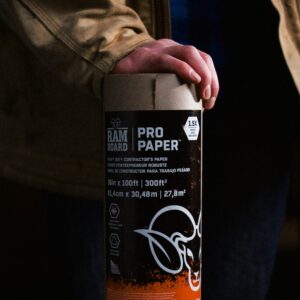
Not every job needs maximum-duty protection– but that doesn’t mean you should settle for flimsy coverage. If you’re looking for a step up from builder’s paper without going full Ram Board, Ram Board Pro Paper is a contractor approved in-between. At 1.5x thicker than traditional builder’s paper, it delivers better durability, fewer tears, and more confidence on the job.
And as we’ve already said: thickness equals durability.
What Floor Protection Holds Up Under Heavy Foot Traffic?
When the job gets busy, your floor protection needs to hold up. Heavy foot traffic, tools, rolling carts, and jobsite mess will quickly expose weak materials. That’s where thickness makes the difference. It determines how well your protection resists tears, handles impact, and stays in place throughout the job.
Builder’s paper works for light coverage. Pro Paper goes further- but for real performance, Ram Board is built to handle it all. The more traffic, weight, and exposure your floors face, the stronger your protection needs to be. Because repairing floors will always cost more than protecting them right the first time.